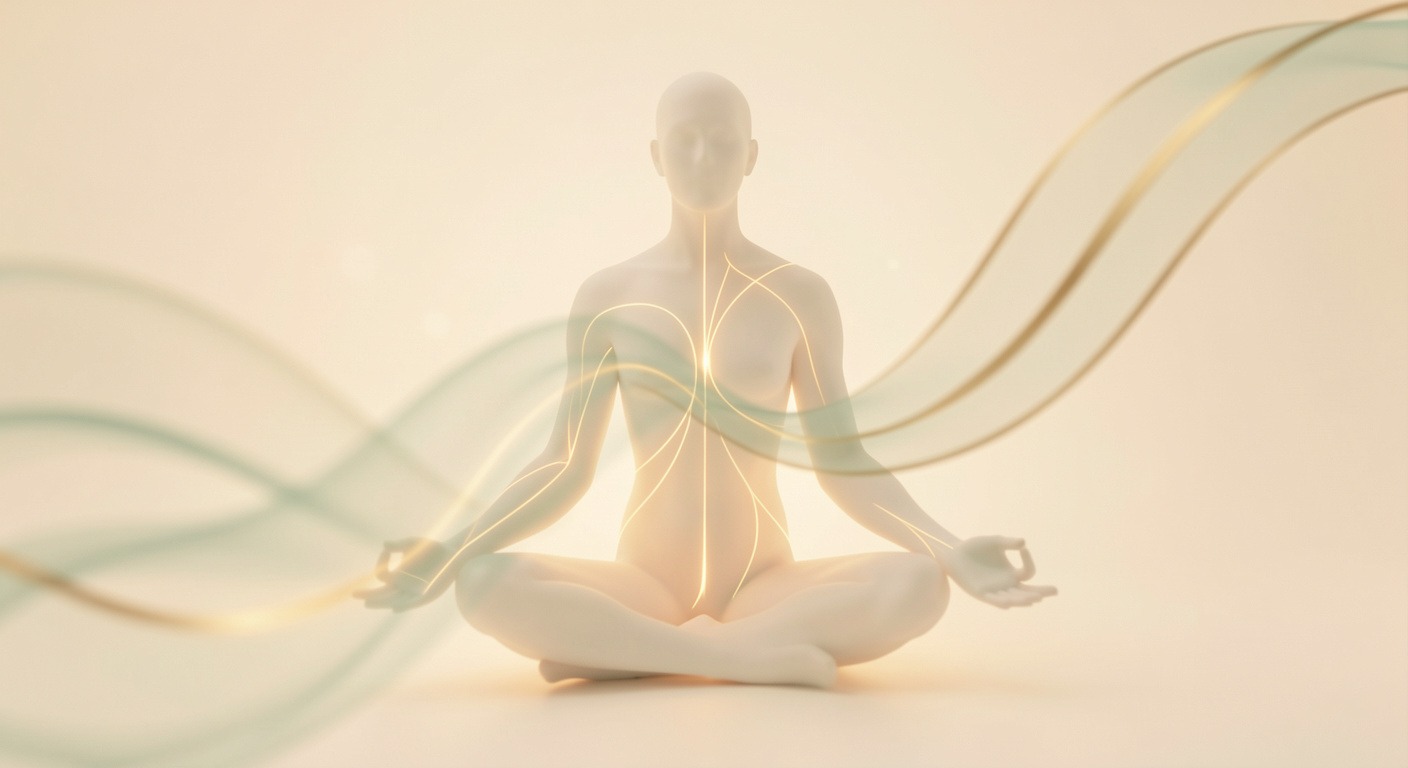
Your body is speaking to you right now. You’ve just been too busy to listen.
Most of us live entirely in our heads , planning, worrying, replaying yesterday’s conversation while half-watching today’s. The body becomes an afterthought. Something to fuel, dress, and drag from meeting to meeting.
A body scan meditation changes that. It’s the simplest mindfulness practice I know , and one of the most effective. You don’t need a cushion, a mantra, or a quiet monastery. You just need a few minutes and a willingness to pay attention.
2. Quick Summary
- What it is: A mindfulness practice where you systematically bring attention to each part of your body, noticing physical sensations without trying to change them.
- Why it works: Research , starting with Jon Kabat-Zinn’s MBSR program at UMass Medical Center in 1979 , shows it reduces stress, improves emotional regulation, and deepens the connection between mind and body.
- How long it takes: Start with five minutes. That’s enough. The goal isn’t duration , it’s attention.
3. The Modern Problem
We’ve gotten very good at overriding our bodies.
Hungry? Push through until the meeting ends. Tired? Coffee. Tense shoulders from three hours hunched over a laptop? You’ll deal with it later , except later never arrives. The body keeps score, and eventually the score settles in the form of chronic tension, poor sleep, and a low-grade hum of anxiety you can’t quite name.
What makes this worse is that we treat the mind and body as separate things. The mind is the CEO, the body is the delivery truck. Keep the truck running and don’t ask questions.
The research tells a different story. Interoceptive awareness , your ability to sense what’s happening inside your body , is closely linked to emotional regulation. People who can accurately read their own internal signals tend to handle stress better and report greater well-being (Greater Good Science Center, UC Berkeley). When you lose touch with your body, you lose touch with an early warning system that’s been refined over millions of years.
4. The Stoic / Mindful Idea
Here’s the core insight behind the body scan , and it’s simpler than you might expect.
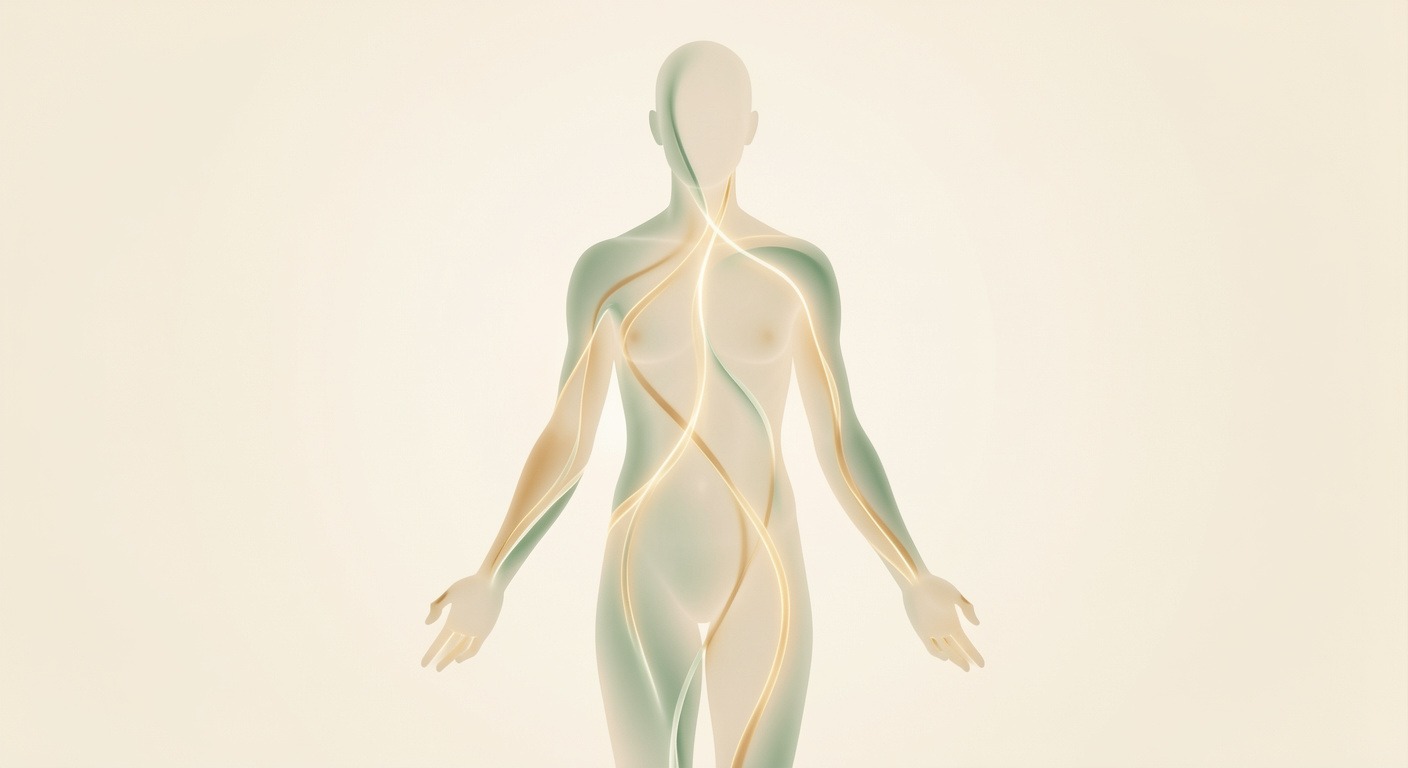
You don’t need to fix anything. You don’t need to relax on command. You don’t need to achieve a special state. The practice is just this: notice what’s already there.
Jon Kabat-Zinn, who developed Mindfulness-Based Stress Reduction at UMass Medical Center, describes mindfulness as “paying attention on purpose, in the present moment, and non-judgmentally.” The body scan is that principle applied directly to your physical experience.
Think of it like this. You’re not a mechanic inspecting an engine for problems. You’re more like a cartographer mapping terrain , curious about what’s present, not desperate to change it. A knot in your shoulder isn’t a failure. It’s data. A tingle in your foot is just a sensation. It doesn’t mean anything good or bad.
The paradox is that when you stop trying to feel better, you often do feel better. Not because you forced relaxation , but because you stopped fighting yourself.
5. Why This Still Matters Today
We’re living in an era of unprecedented mental noise.
Notifications. News alerts. A constant stream of information that competes for your attention and rarely rewards it. The body scan is one of the few practices that doesn’t ask you to add anything , it asks you to subtract the noise and return to something you already have: your own physical presence.
A 2024 review in Frontiers in Psychology found that MBSR practices, including the body scan, measurably reduce perceived stress and anxiety , and not just in clinical populations. The effects show up in everyday people with everyday stress. A separate body of research tracked physical markers like cortisol levels and heart rate variability , both of which improve with regular body scan practice.
This matters because most stress-management advice asks you to do more , exercise more, plan more, optimize more. The body scan asks you to stop and notice. In a culture obsessed with addition, subtraction feels almost radical. That’s exactly why it works.
If you’ve been exploring mindfulness, you might also find our guide on [mindful breathing for beginners] helpful , it pairs naturally with the body scan.
6. What To Practice Instead
Most of us default to problem-solving mode with discomfort.
Tight neck? Roll it out. Racing thoughts? Distract yourself. Anxious? Find something , anything , to make it stop. This isn’t wrong; it’s just incomplete. Short-term relief is sometimes necessary, but it doesn’t teach you much about what’s happening underneath.
The body scan shifts the approach. Instead of “fix this,” it’s “notice this.” Instead of rushing past discomfort, you pause and get curious.
This doesn’t mean you endure pain silently. If something genuinely hurts, adjust your position. The practice is about awareness, not martyrdom. But for the everyday tensions , the clenched jaw you didn’t know you had, the shallow breathing, the shoulders living somewhere near your ears , noticing is the first step toward releasing.
What you practice grows stronger. If you practice ignoring your body, you get better at ignoring your body. If you practice paying attention , gently, without judgment , you get better at that instead.
7. Simple Exercise: The 5-Minute Body Scan
This is the actual practice. Set aside five minutes and follow the steps. No experience required.
What you need: A quiet space where you won’t be interrupted. A comfortable surface , a bed, a yoga mat, or even a carpeted floor works fine. Dim lighting if possible. Loose clothing helps.
Time needed: 5–10 minutes.
- Get comfortable. Lie down on your back with your arms at your sides, palms facing up. Let your feet fall open naturally. If lying down isn’t comfortable, sitting in a chair with both feet flat on the floor works too. Close your eyes.
- Breathe naturally for about a minute. Don’t change your breathing. Just notice it. Feel the air moving in and out. Notice where you feel the breath most , your nose, your chest, your belly. Let your attention rest there.
- Bring your attention to the top of your head. What do you notice? Maybe a faint tingling on your scalp. Maybe the temperature of the air against your skin. Maybe nothing in particular , and that’s fine. There’s no right sensation. Just notice.
- Move slowly downward. Shift your attention to your forehead, your eyes, your jaw. (Is your jaw clenched? Just notice , don’t force it to unclench.) Then your neck, your shoulders, your arms , all the way down to your fingertips. Go slowly. Spend a few breaths on each area.
- Continue through your body. Chest, belly, lower back, hips. Then your legs , thighs, knees, calves, ankles, feet, toes. Notice the weight of your body against the surface beneath you. Notice any areas that feel warm or cool, heavy or light, tense or relaxed.
- When your mind wanders , and it will , gently bring it back. This is the actual skill. Not having a blank mind, but noticing when you’ve drifted and returning without self-criticism. Each return is a rep. You’re building a muscle.
- Finish by expanding your awareness to your whole body at once. Feel yourself as a single, complete thing , breathing, alive, present. Stay here for a few breaths. Then gently open your eyes.
Reflection question: What part of your body felt the most surprising to you , and what did you notice about it that you hadn’t noticed before?
8. Common Mistakes
Trying to fix sensations instead of noticing them.
If your shoulder feels tight, the impulse is to relax it immediately. Resist that impulse. Just notice the tightness , its shape, its edges, whether it changes as you breathe. The noticing is the practice. If the sensation shifts naturally, that’s fine. If it stays, that’s also fine.
Judging yourself when your mind wanders.
Your mind will wander. Probably within the first thirty seconds. This is not a failure , it’s how minds work. The practice isn’t about maintaining perfect focus; it’s about recognizing when you’ve drifted and choosing to return. Every time you come back, you strengthen the neural pathways that support sustained attention. That’s the whole game.
Going too fast.
A five-minute body scan should feel unhurried. If you’re racing from head to toe like you’re checking off a grocery list, slow down. Spend a full breath on each body part. There’s nowhere to get to.

9. Final Reflection
The body scan won’t fix your life overnight. It won’t eliminate stress or make difficult emotions disappear. What it can do , reliably, over time , is change your relationship to your own experience.
When you spend five minutes actually inhabiting your body instead of treating it like a vehicle for your brain, something shifts. The relentless mental chatter gets a little quieter. Physical tension you didn’t know you were carrying loosens just enough to notice. And you walk back into your day feeling a bit more grounded , not because anything changed externally, but because you paid attention to what was already there.
Try it once. Then try it again the next day. The benefits accumulate quietly, the way most meaningful things do.