
Your problems are not as big as they feel. They only look that way because you are standing too close.
Most of us spend our days buried in concerns that feel enormous — a tense conversation at work, a decision we are second-guessing, a worry that loops through the mind at 2 a.m. The thoughts feel urgent. They demand reaction. They consume the whole frame.
But what if you could zoom out? Not ignore the problem — just see it from a distance that reveals its true size.
This is what Marcus Aurelius practiced nearly two thousand years ago. He called it looking at life from above — and it may be the simplest stoic perspective practice you have never tried.
Quick Summary
- The View from Above is a Stoic mental exercise that shrinks anxiety by zooming out to a cosmic perspective
- Marcus Aurelius used it while ruling an empire in crisis — if it worked for him, it can work for your Tuesday
- The practice takes 5–10 minutes and requires nothing but imagination
- It does not make problems disappear. It makes them proportionate.
The Modern Problem
We live close to our thoughts. A critical email lands in your inbox and suddenly the whole day feels tense. A friend cancels plans and you spend the evening wondering if you did something wrong. The mind treats every event — large or small — as if it fills the entire screen.
This is not weakness. It is proximity. Hold your thumb an inch from your eye and it blocks the sun. The thumb did not grow — you just placed it too close.
Modern life intensifies this. Notifications, deadlines, comparison, and constant input keep the mind zoomed in. We lose the wide shot.
The Stoic / Mindful Idea
Marcus Aurelius, the Roman emperor and Stoic philosopher, ruled during one of the empire’s most difficult periods — wars on multiple fronts, a devastating plague, internal rebellion, and political betrayal. He had no military training yet found himself leading armies. His personal life was marked by loss: he buried several of his children.
Yet he wrote in his private journal, the Meditations:
How swiftly all things vanish — in the universe, the bodies themselves. In time, the memory of them.
— Marcus Aurelius, Meditations 9.30
This was not detachment from life. It was a deliberate practice of stepping back mentally to see things from a wider vantage point. The Stoics called it the View from Above — imagining yourself rising higher and higher, watching your life, your city, your country, and eventually the entire planet from a cosmic distance. This marcus aurelius meditation has outlived empires because it requires nothing but a quiet mind.
From that height, what happens to your anxiety? The argument that filled your morning shrinks. The meeting you have been dreading becomes one speck among billions. The mistake you cannot stop replaying is a dot in a galaxy of dots.
This is not about minimizing your problems. It is about seeing them accurately. Most suffering comes not from events but from the distorted size we give them.
Marcus Aurelius also wrote:
If you are distressed by anything external, the pain is not due to the thing itself, but to your estimate of it; and this you have the power to revoke at any moment.
— Marcus Aurelius, Meditations 8.50
The View from Above is exactly that — a tool to revoke the exaggerated estimates we place on passing difficulties.
Why This Still Matters Today
You do not need to be an emperor under siege to benefit from this practice. You just need a mind that sometimes magnifies the wrong things — which is every human mind.
Consider these modern moments:
- You post something online and check constantly for likes. From a cosmic perspective, this is a tiny electronic signal on one planet among trillions.
- You ruminate over a conversation from three days ago. From a wide enough view, the other person has already forgotten it.
- You worry about your career trajectory. Zoom out to a decade, and this one project is barely visible.
The practice does not diminish ambition or care. It quiets the noise so you can direct your energy toward what actually matters.
There is a modern parallel that makes this idea even more tangible. Astronauts who see Earth from space often describe a profound cognitive shift — sometimes called the “overview effect.” The borders they grew up with vanish. The conflicts that dominate news cycles look small against the fragile blue marble hanging in blackness. They return with a permanent sense of perspective.
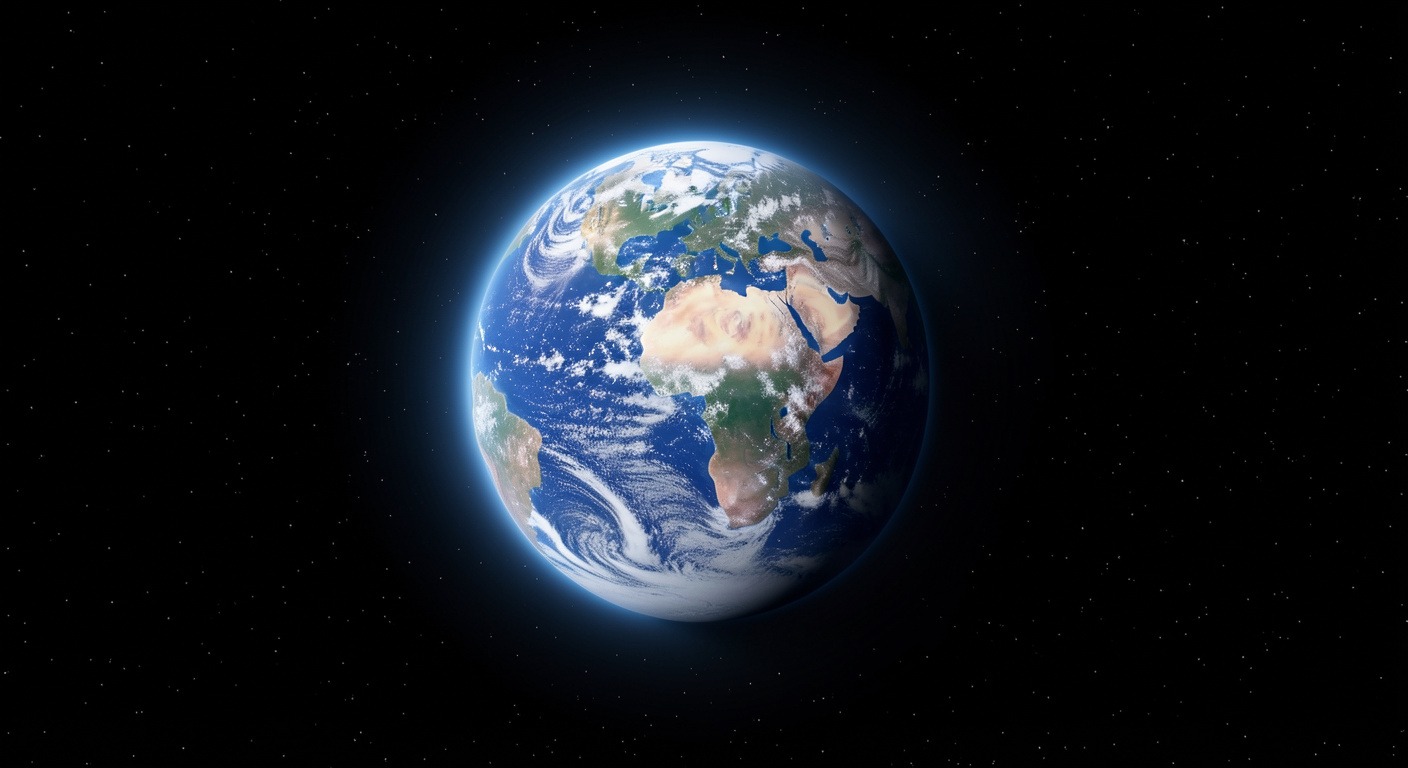
You can access a version of that without a rocket. You just need five quiet minutes and your imagination.
What To Practice Instead
Instead of letting your mind stay zoomed in on the problem that aches the loudest, practice deliberately pulling the lens back. The view from above stoicism teaches is not an escape — it is a way to see more clearly.
When to use the View from Above
- When one worry is taking up all your mental space
- When you are about to react to something and need a pause
- When you cannot sleep because your mind is looping
- When you feel overwhelmed by a decision
- As a morning practice to set the tone for the day
What it does not do
- It does not solve your logistics. You still need to answer the email, have the conversation, or make the choice.
- It is not emotional suppression. You feel the feeling — you just see it in context.
- It is not a one-time cure. Like any practice, it deepens with repetition.
Simple Exercise: The View from Above
This stoic view from above exercise takes a few minutes and can be done anywhere.
Time: 5–10 minutes
Steps
- Settle your body. Sit comfortably or lie down. Close your eyes. Take three slow breaths, letting each exhale be slightly longer than the inhale.
- Picture yourself in the room. See your body from above — the posture, the expression on your face, the space around you. Notice the thoughts running through your mind without engaging them.
- Rise above the building. Imagine floating upward through the ceiling. See the roof, the street, the neighborhood. If you are at home, see your house from above. If at work, see the building and the people moving inside — each carrying their own invisible burdens.
- Rise above the city. Now pull higher. See the grid of streets, the tiny cars, the parks, the rivers. Notice how the individual buildings blend into patterns. The person who upset you this morning is somewhere down there — a dot among dots.
- Rise above the country. Mountains, coastlines, sprawling cities reduced to clusters of light. The border lines you learned in school are not visible from here. Nothing is divided the way maps suggest.
- Rise above the Earth. You are now looking at a blue-white sphere suspended in darkness. Every human being who has ever lived — every argument, every triumph, every heartbreak — happened on that small surface. From here, the distinction between your problem and someone else’s dissolves. There is only one shared human experience.
- Hold the image. Stay in this perspective for a minute or two. Let your specific worry drift into the vastness. It is still real — but it is now the right size.
- Return slowly. Imagine yourself descending gently back through the layers — atmosphere, country, city, building, room, body. Open your eyes. Notice if anything feels different.
Why it helps
This practice interrupts the brain’s threat-amplification loop. Research on cognitive distancing shows that stepping back from a thought — even visually — reduces its emotional charge. The problem remains, but the panic around it quiets. You can think more clearly.
Reflection question
What felt different when you held your problem against the scale of the planet? What would change if you practiced this once a day for a week?
Common Mistakes
- Expecting the worry to disappear forever. The exercise shifts perspective, not reality. The worry may return — but you now have a tool to resize it.
- Doing it only in crisis. The View from Above works best as a daily practice, not an emergency button. Your mind needs training to access the perspective under pressure.
- Getting lost in technical detail. If you cannot vividly picture the galaxy or Earth, do not force it. The emotional shift matters more than visual precision. A simple mental zoom — yourself, your street, your city, the planet — is enough.
- Using it to avoid responsibility. Perspective is for clarity, not escape. After the exercise, you still act. You just act from a calmer place.
Final Reflection
You are not your thoughts. You are the awareness that notices them.
The View from Above is not about pretending problems do not exist. It is about remembering that they exist within a much larger frame — and that frame holds beauty, connection, and time enough to handle what comes.

The next time a worry fills your screen, pause. Take a breath. Rise a little higher. The problem has not grown — you just forgot how wide the sky actually is.
Social Media Highlight
Hold your worry a little further from your face. It does not shrink — it just returns to its true size.
Sources / References
- Marcus Aurelius, Meditations — Book 9.30, Book 8.50
- Modern Stoicism resources on the View from Above practice (dailystoic.com, viastoica.com)
- Overview Effect research — Frank White, “The Overview Effect: Space Exploration and Human Evolution”