
Grief and Stoicism: Is It Okay to Feel Sad?
Wellness Disclaimer: This article is for educational purposes only and is not a substitute for professional grief counseling or mental health treatment. If you are experiencing prolonged or severe grief, please consult a qualified mental health professional.
You are standing at a funeral, tears on your face, and someone says: “You are into that Stoicism thing. Shouldn’t you be handling this better?”
Here is the truth about stoicism grief: it is not what you have been told. The popular image of Stoicism is the stiff upper lip. But Seneca, who wept so uncontrollably at his friend’s funeral that he later confessed embarrassment, proves that image is a lie. The real Stoic position is not suppression. It is a framework for feeling fully without being destroyed by what you feel.
The Problem: Why “Don’t Cry” Is Not Stoic
Most people encounter Stoicism through quotes stripped of context, designed to sound tough. The result: Stoics are cold, unfeeling, the people you do not call when you are falling apart.
When you are grieving and trying to live by Stoic principles, you face a double burden: the grief itself, plus the guilt of thinking you are failing at philosophy because you cannot stop crying. You are not failing. The question does Stoicism suppress emotions has a direct answer from Seneca: no. Calling numbness virtue is a mistake. Seneca addressed this in Letter 63:
>
“We may weep, but we must not wail.”
— Seneca, Moral Letters to Lucilius, Letter 63, Section 1 (tr. Richard M. Gummere)
Seneca does not say “do not weep.” He says weep. He gives permission. The boundary is not between feeling and not feeling. It is between releasing grief and drowning in it.
The Stoic Perspective: Seneca’s Permission to Grieve
If you read one thing from the Stoics on grief, read Seneca’s Letter 99. Written to a friend who lost a child, it should permanently retire the “Stoics don’t feel” myth:
>
“What, then, shall we do? Let us allow them to fall, but let us not command them do so; let us weep according as emotion floods our eyes, but not as much as mere imitation shall demand.”
— Seneca, Moral Letters to Lucilius, Letter 99, Section 16 (tr. Richard M. Gummere)
Seneca distinguishes between natural tears that ease the soul, and performed tears we amplify because we think grief should look a certain way. Natural tears heal. Performed tears trap you.
This is what seneca on grief actually teaches: feel what is real, not manufactured. When you cry, ask: are these tears genuine or from a script?
Key Concept Explained: How Stoicism Grief Actually Works
Seneca’s two-tier model is the core insight most people miss:
Tier 1: Natural, involuntary grief. The wave that hits unexpectedly. A song. A smell. These tears come from love, not performance. Seneca says let them fall. They move through you and pass.
Tier 2: Performed, self-reinforcing grief. The grief you feed. The grief that wants an audience. Seneca observed: “How few men are sad in their own company!” If your tears intensify when someone is watching, that is not healing.
This answers the question that brings so many people to stoicism sadness: can I be sad and still be Stoic? Yes. The sadness is not the problem. What you do with the sadness is where Stoic practice begins.
Why This Works: Ancient Wisdom Meets Modern Psychology
Seneca’s two-tier model maps onto modern grief psychology. The “Continuing Bonds” model (Klass, Silverman, and Nickman, 1996) found maintaining an ongoing inner relationship with the deceased is healthy. You transform the connection from pain into meaning.
Seneca anticipated this in a single sentence from Letter 63:
>
“I have had them as if I should one day lose them; I have lost them as if I have them still.”
— Seneca, Moral Letters to Lucilius, Letter 63, Section 7 (tr. Richard M. Gummere)
This is the healthy Stoic posture: you loved fully, knowing loss was inevitable. When loss came, you carried them forward.
This is where grief and philosophy intersect most powerfully. Philosophy does not take your grief away. It gives you a way to hold it without it consuming you.
Practical Exercise: The Stoic Grief Letter
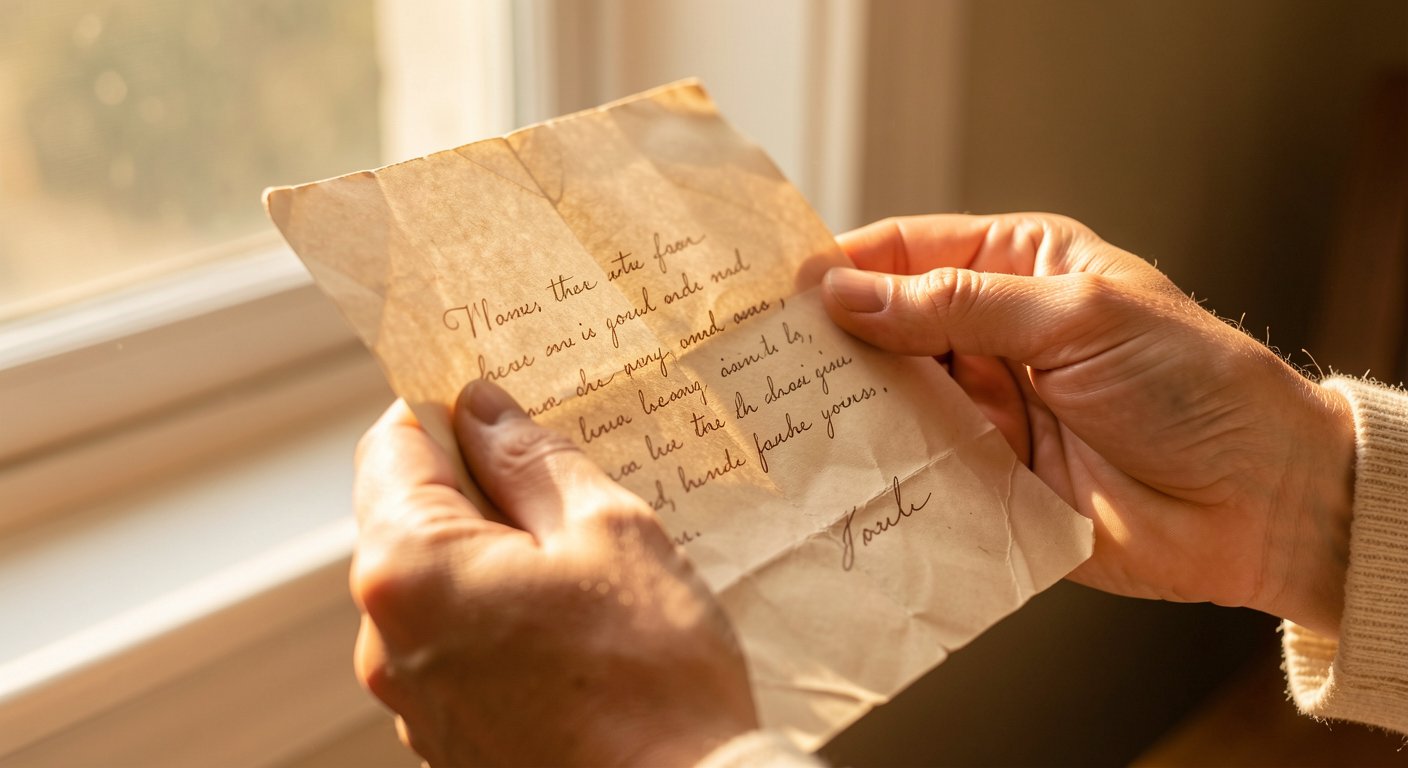
Seneca processed grief by writing letters. Each was a structured exercise: feel, examine, integrate. Here is how.
You need paper, a pen, and two sittings. Do not type.
Part 1: The Unfiltered Letter
Write to the person you have lost. Do not edit. Do not try to be Stoic. Tell them what you miss, what you regret, what angers you. Cry while you write. Seneca wept for Serenus; you get to weep too. Set it aside.
Part 2: The Stoic Response
Return the next day. Write a second letter from your wisest self:
- For each “I miss”: complete “I am grateful I had…” Gratitude sits beside grief, it does not cancel it.
- For each regret: ask “Was this within my control?” If not, release it. If yes, forgive yourself.
- For each “It’s not fair”: reframe: this person was never yours to keep. They were on loan.
Close with one commitment: a small action today that honors their memory. Walk somewhere you went together. Call someone still here and tell them you love them.
Common Mistakes: What People Get Wrong
Mistake 1: Thinking Stoicism means suppressing grief. Seneca said that would be “lack of feeling rather than virtue.” Numbness is not wisdom.
Mistake 2: Letting grief become an identity. Seneca warned chronic grief becomes self-perpetuating. Processing grief is not the same as building a house in it. The goal: stop missing them being the only thing you do.
Mistake 3: Rushing to gratitude too soon. Epictetus’s “restoration” reframe is powerful but advanced. Do not force it on day three. In acute loss, just feel. The framework is there when you are ready.
Mistake 4: Confusing philosophy with therapy. The Stoics provide tools for navigating grief, not treatment for complicated grief disorder. This is what ancient wisdom for grief gets right: it offers a lens, not a cure. Knowing the difference matters.
Deeper Dive: Epictetus and the Restoration Reframe
Epictetus offers the most challenging Stoic teaching on loss:
>
“Never say about anything, I have lost it, but say I have restored it. Is your child dead? It has been restored. Is your wife dead? She has been restored.”
— Epictetus, Enchiridion, Chapter 11 (tr. Elizabeth Carter)
This can sound cold on first reading. But Epictetus is not denying pain. He is challenging ownership. The people you love were never truly yours. They were on loan. You were a caretaker, not an owner. The “restoration” framing transforms grief from theft into gratitude for the time you were given.
This is how stoic emotional health works: the hurt comes partly from a mistaken belief that people belong to us permanently. They never did.
Marcus Aurelius, who buried multiple children, understood this deeply. In Meditations, he wrote that all of us, including our children, are like leaves scattered by the wind. This is not cold detachment. It is finding comfort in belonging to a natural order. Marcus aurelius grief was real and personal. He processed it within a framework that gave it meaning.
How to Start Today
If all of this feels like too much, start with one sentence. Write it where you will see it:
“We may weep, but we must not wail.”
That is your permission slip. You are allowed to cry. You are allowed to hurt. The Stoic part is what happens after the tears fall. Do you let them pass through you, or do you drown in them?
This is what how stoics handle death looks like in practice: grief is not suppressed, it is processed.
Reflection Question
If you truly believed that everyone you love is on loan, not yours to keep but yours to cherish for whatever time you are given, how would you love differently today? And how would you grieve differently when the loan comes due?
Final Reflection
Grief and philosophy have been companions for millennia because philosophy cannot fix death. What it can do is prevent death from fixing you in place. The Stoic approach is not clean or easy. It is a way of feeling the pain fully, honoring what was lost, and choosing, gently, to keep living.
Seneca wept so hard he embarrassed himself. Then he wrote letters that have helped people for two thousand years. He did not suppress his grief. He moved through it.
Wellness Disclaimer: This article is for informational and educational purposes. It is not a medical intervention and is not a substitute for professional grief counseling or mental health treatment. If you are experiencing prolonged or severe grief, please consult a qualified mental health professional.
Social Media Highlight: “Stoicism never asked you to stop feeling. It asked you to stop letting feeling become the only thing you do.”